Month by month
| Month | Afternoon | Night | Nights below 0°C |
|---|---|---|---|
| January | -1°C | -13°C | 31 |
| February | 2°C | -10°C | 28 |
| March | 10°C | -2°C | 19 |
| April | 18°C | 4°C | 4 |
| May | 22°C | 9°C | 1 |
| June | 26°C | 14°C | 0 |
| July | 29°C | 16°C | 0 |
| August | 27°C | 14°C | 0 |
| September | 22°C | 9°C | 0 |
| October | 15°C | 2°C | 9 |
| November | 7°C | -6°C | 26 |
| December | 1°C | -10°C | 30 |
Averages of daily highs and lows, modelled for the area around the canyon at 1,115 m (Copernicus ERA5 reanalysis, daily values for 2016 to 2025). The Valley of Castles car park is at a similar height, and the canyon floor can be hotter than a regional model shows on a still, sunny day.
Spring: April and May
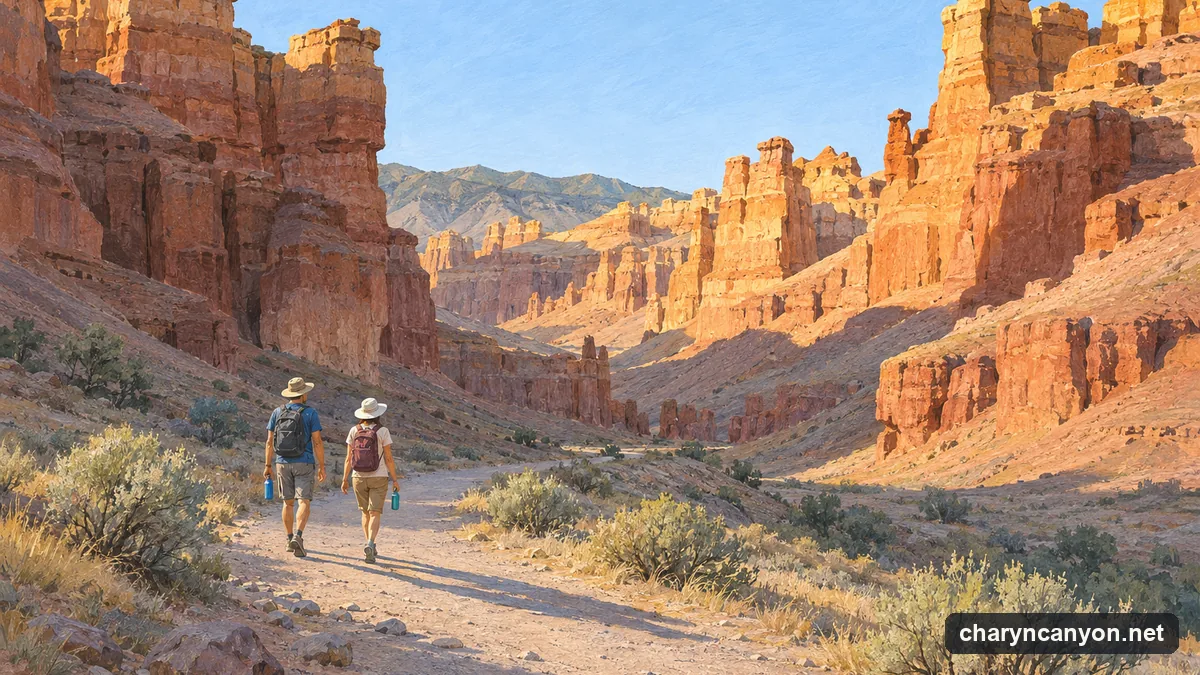
Afternoons of about 18 to 22°C and cool nights make spring a good time for the walk to the river and back. April still averages about four frosty nights and May about one, so pack a warm layer for the early morning.
Summer: June to August
July is the hottest month, with afternoons averaging about 29°C and, in the ten years to 2025, one or two days in an average July at 35°C or more; the hottest modelled day in that period reached 36.7°C. The valley floor is open gravel and rock with very little shade, and the walk back up comes at the hottest time of day if you start late. Go down early in the morning, carry plenty of water and a hat, or ride back up in the park’s transport (865 tenge a seat in 2026). The park’s route document advises a hat, sunglasses and drinking water on every visit.
Autumn: September and October
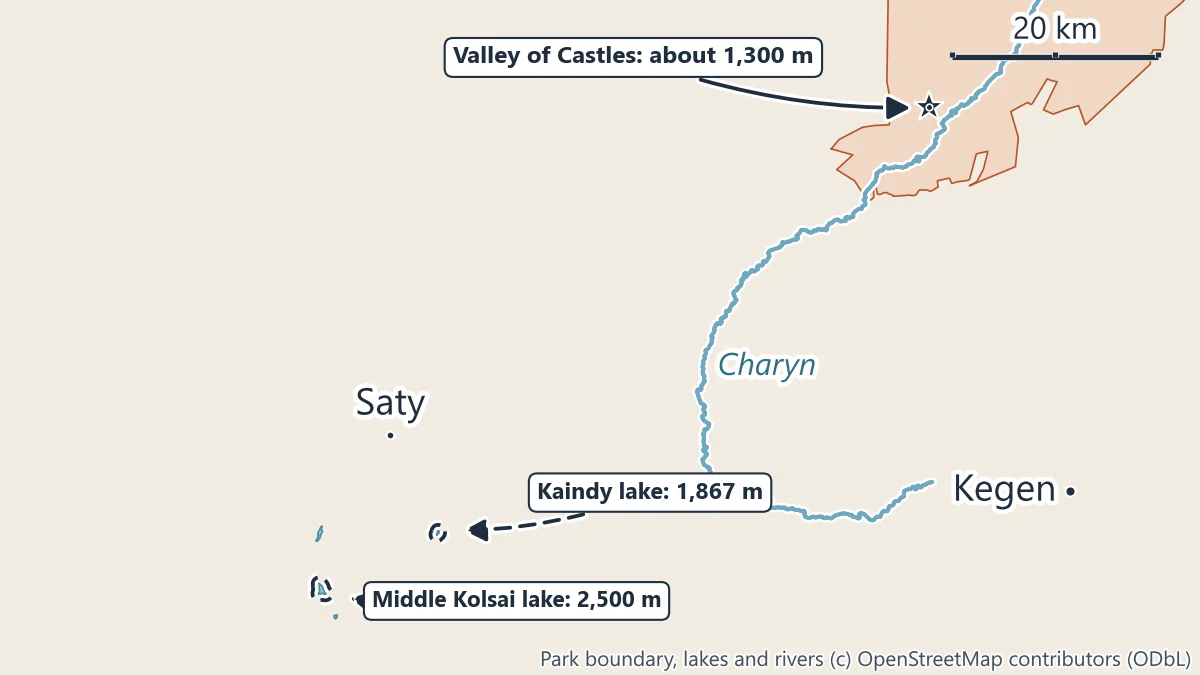
September is as warm as May, with afternoons of about 22°C; October cools to about 15°C, and its nights start to freeze. The low autumn light suits the red rock, and the lakes at Kolsai and Kaindy are higher and colder: Kaindy is at 1,867 m and Middle Kolsai at 2,500 m, so take a warm layer for that part of the trip.
Winter: November to March
The park keeps its routes open all year. From November to March nights are below freezing almost every night, with January averaging -13°C at night and only about -1°C in the afternoon, and some snow falls. The staircase and the steeper parts of the path can be icy. Days are short: start in the morning and be back on the rim well before dark.
Rain and floods
The park’s route document for the Valley of Castles warns that heavy rain can bring floods. If a storm builds, leave the dry valley floor and keep away from the river.
Before you go
- The fee and the transport down: entrance fee and hours.
- The walk: the Valley of Castles trail.
- Going on to the lakes: Charyn, Kolsai and Kaindy in one trip.